Rubber water suction hoses engineered with embedded steel wire helix are designed to handle vacuum pressures without collapsing. They are widely used in mining, construction sites, and agricultural drainage. Due to their heavy weight and high stiffness, incorrect installation can quickly damage the inner tube or outer fabric impression cover.
Here is the step-by-step technical guide to deploying heavy-duty rubber suction lines properly.
Unlike lightweight PVC hoses, a heavy-duty steel wire reinforced rubber hose cannot be easily stretched or compressed horizontally.
Do not extend or compress axially to fit fixed pipe flanges.
Calculate the exact distance, accounting for engine vibration or water-hammer shockwaves, and leave a natural droop/loop.
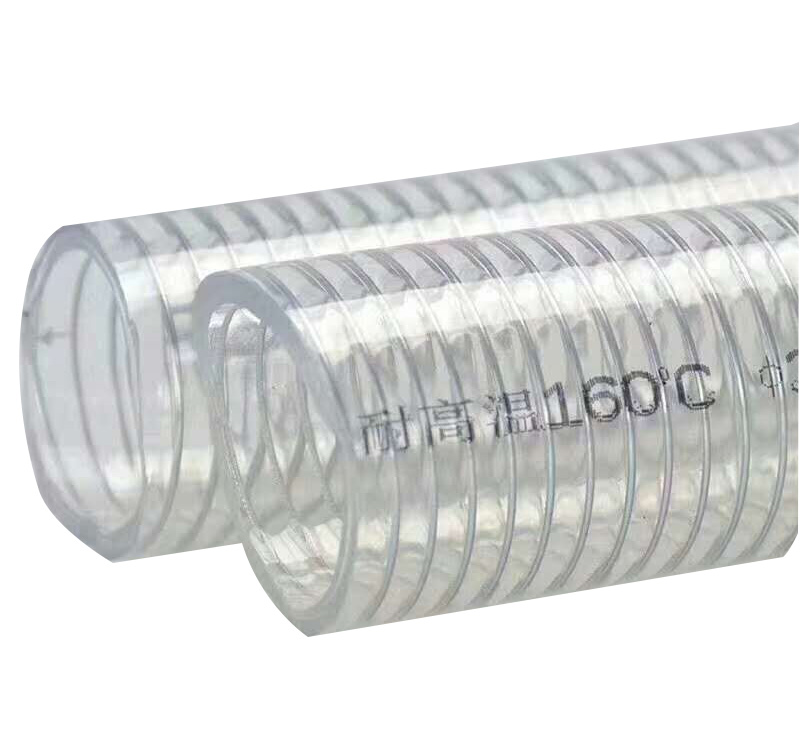
Never drag the hose over sharp rocks or steel edges. Although premium SBR/EPDM blends are highly abrasion-resistant, severe mechanical scraping can compromise the protective cover.
Do not run over the hose with heavy equipment. Vehicles like forklifts or trucks passing over a rubber suction hose can crush the steel wire helix inside, causing irreversible inner tube collapse and restricting flow.
Because rubber suction hoses are heavy, especially when filled with fluid and sediment, they must be properly supported. Use rope saddles, slings, or pipe brackets every 1.5 to 2 meters to avoid straining the end connections.
Ensure the hose flexes in only one plane. If a suction hose is twisted or forced to bend in multiple directions simultaneously, the internal steel wire reinforcement can separate from the rubber compound, leading to localized bubbling and failure.
1. Align the companion flanges perfectly before tightening bolts. Do not use the hose to correct misaligned pipe bolt holes.
2. Tighten bolts in a star pattern to distribute sealing pressure evenly across the rubber gasket surface.
A correctly installed rubber suction hose should operate smoothly without vibrating excessively or straining its connections. For specific questions regarding chemical compatibility, high-vacuum ratings, or wholesale pricing, reach out to Suzhou Seapeak (sinohose.com)—your trusted rubber hose manufacturer.